
The UK video games sector brings together far more than the studios that design and build games. Behind every release is a wider network of publishers, technology companies, artists, audio specialists, marketing teams and support businesses. These organisations are spread across the country, creating regional communities where technical knowledge, creative talent and commercial experience can develop together.
Businesses Across the UK Games Ecosystem
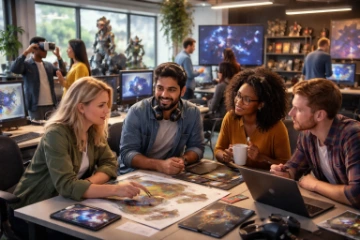
The UK games ecosystem includes much more than development studios. Publishers, technology companies and specialist providers all contribute to creating, releasing and supporting games.
- Developers handle programming, design, animation, testing and production.
- Publishers support funding, marketing, distribution and commercial planning.
- Specialist businesses provide localisation, quality assurance, audio, motion capture and technical services.
- Technology providers support areas such as cloud infrastructure, cybersecurity and online systems.
These businesses often work closely together throughout a game’s development. Their different skills allow studios to access specialist expertise while helping create a broader industry with opportunities across creative, technical and commercial roles.
Games Communities Around the Country
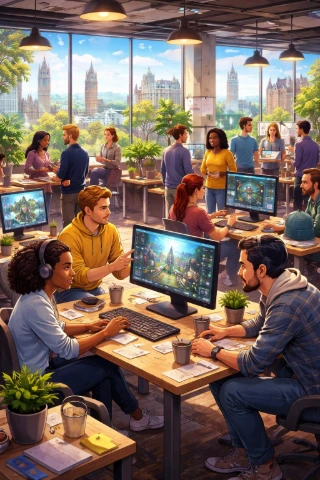
Games development in the UK is not concentrated in a single city. Different regions have developed their own communities, often supported by established studios, universities, local networks and experienced professionals who move between companies or establish new businesses.
Regional Clusters and Local Networks
Areas including London, Dundee, Guildford, Leamington Spa and parts of northern England have long been associated with games development. These locations can attract new studios because experienced workers, suppliers and educational institutions are already nearby. Informal networks also matter. Developers meet through industry events, local groups and professional communities, making it easier to exchange knowledge, recruit staff and find potential collaborators. Over time, this concentration of experience can help smaller regional games communities become established.
Why Location Still Matters
Remote and hybrid working have made it possible for games companies to recruit from a wider geographical area, but physical communities still have value. Studios benefit from access to local graduates, specialist suppliers and experienced employees. Universities and colleges may also build relationships with nearby companies, giving students greater awareness of how professional development works. This connection between education and industry can help regions retain talent rather than requiring new developers to move elsewhere.
The Skills Behind Game Development
Producing a game requires a combination of creative, technical and organisational abilities. Few projects can be completed by one type of specialist, particularly as games become more complex and are expected to operate across different devices and online environments.
Technical and Creative Roles
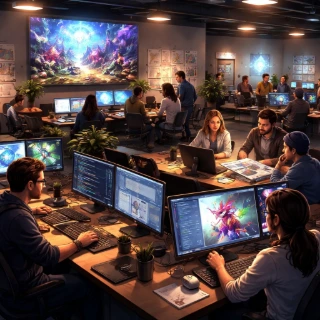
Programmers build the systems that make a game function, while designers develop its rules, structure and player experience. Artists, animators and technical artists create characters, environments and visual effects. Sound designers, composers and writers contribute to atmosphere and storytelling, while producers coordinate schedules and communication between departments. Other roles include quality assurance, community management, data analysis, marketing and user research. Each discipline requires its own expertise, but collaboration between them is equally important.
The Importance of Specialist Knowledge
Certain roles require skills that take considerable time to develop. Graphics programming, artificial intelligence, network engineering, technical animation and advanced visual effects are examples of areas where specialist knowledge can be particularly valuable. Studios must also adapt as hardware, game engines and development methods change. This means professional learning does not stop when someone enters the industry. Developers regularly update their knowledge as new tools and production techniques become part of everyday work.
Building the Next Generation of Games Talent
Skills shortages have long affected parts of the UK games sector, especially highly technical roles. The challenge is not only attracting graduates, but making sure new talent develops skills that reflect the needs of professional studios.
Universities and colleges now offer courses in game design, programming, animation and digital art, often combining theory with practical projects. Studio partnerships, placements and mentoring can also help students understand industry expectations.
Other routes include apprenticeships, internships, game jams and training programmes. These options can widen access to the sector and help people from different educational and professional backgrounds build relevant experience.
A Sector Built on People and Skills
The UK games industry is shaped by a broad network of studios, publishers, technology businesses and specialist service providers. Its strength depends not only on successful games, but also on the communities and skills that make development possible.
Continued cooperation between employers, educators and professional organisations can help new talent understand where opportunities exist and what modern studios require. As technology and player expectations continue to change, the ability to develop specialist skills and share knowledge across the sector will remain central to the future of UK game development.